
Introduction to Virtual Reality in Elderly Communities
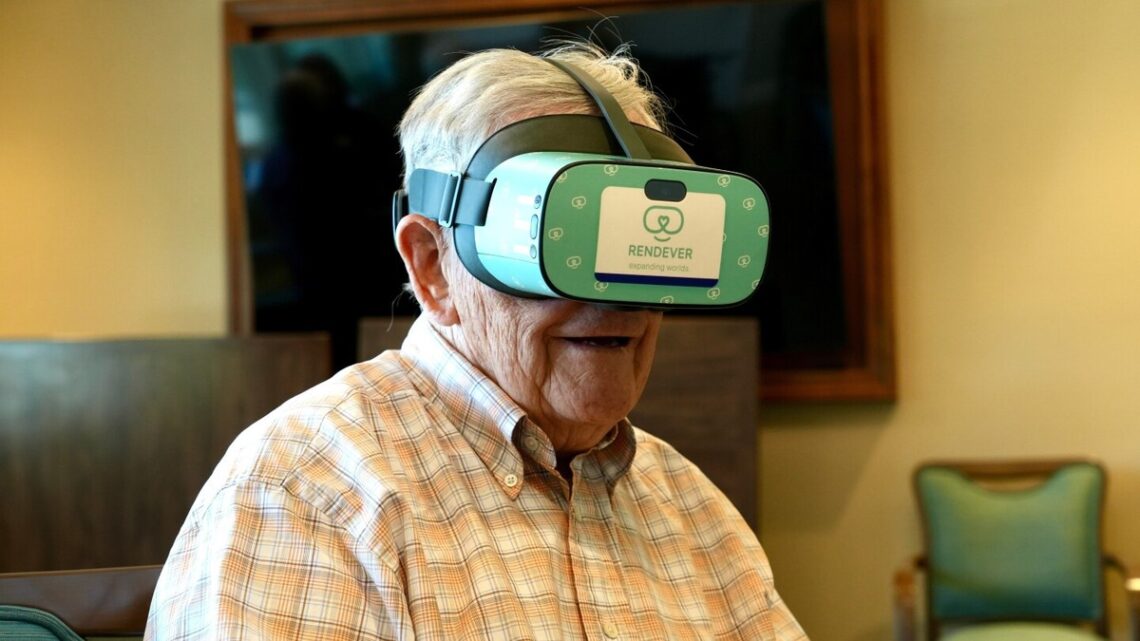
Much like many retirement communities across the United States, The Terraces in Los Gatos, California, serve as a peaceful refuge for an aging population that no longer has the opportunity to travel to distant destinations or embark on adventurous journeys. However, many residents—most of them in their eighties and nineties—still have the chance to be transported through the use of virtual reality (VR). When caregivers organize these sessions, residents take turns donning VR headsets, which introduce them to distant worlds and new experiences.
Experiences Enabled by Virtual Reality
Within minutes, the VR devices can immerse residents in scenes from Europe, delve into the ocean’s depths, or elevate them to thrilling hang gliding expeditions—all while they remain seated together. The programming selection is curated by Rendever, a company that has transformed a sometimes isolating technology into a means for improving cognitive health and fostering social bonds in over 800 senior communities across the U.S. and Canada.
Resident Impressions and Reactions
Earlier this year, residents at The Terraces participated in VR sessions where they paddled with arms resting at the sides of their chairs during a virtual swim with dolphins, viewed in 3D by Rendever. Ginny Baird, age 81, expressed her enthusiasm afterward: “We were able to dive underwater without even holding our breath!” During one session featuring a hot air balloon flight, a resident exclaimed, “Oh my God!” while another shivered, remarking, “It’s impressive to see.”
Revisiting Personal Histories via Virtual Travel
Rendever’s technology also enables older adults to virtually revisit places from their past. For some, this is the first time in decades they have seen their childhood homes and neighborhoods again. Sue Livingstone, age 84, found that a virtual trip to her childhood neighborhood in Queens, New York, helped her recognize the benefits of VR technology, despite her active lifestyle compared to many peers at The Terraces in Silicon Valley, located approximately 88 kilometers south of San Francisco.
“It’s not just about seeing the place again but also about evoking memories,” explained Livingstone. “Some residents who never leave their comfort zones might discover they enjoy trying this technology if convinced to give it a chance.”
The Social Impact of Virtual Reality
Adrian Marshall, director of community life at The Terraces, noted that once news spreads about successful VR experiences, other residents grow curious and eager to try it—even if it temporarily means missing a popular community game like Mexican Train, a domino-like game. “It becomes a common topic of conversation and really helps to connect people,” he said. “VR programming creates a human bridge, allowing residents to realize they share interests and similarities, transforming these artificial environments into meaningful realities.”
Expansion and Funding for VR Projects
Based in Somerville, Massachusetts, Rendever plans to expand its platform for seniors thanks to a recent grant from the National Institutes of Health (NIH), amounting to nearly $4.5 million. This funding aims to study ways of reducing social isolation among older adults living at home, alongside their caregivers.
Research indicates that limited-format VR content can help seniors maintain and enhance cognitive functions, improve memory, and strengthen social ties with family members and other residents in care facilities. Experts emphasize that VR should serve as a supplement—rather than a replacement—for other engaging activities.
Considerations and Cautions
Neuropsychologist Katherine “Kate” Dupuis, studying aging at Sheridan College in Canada, pointed out the risks associated with excessive screen time. However, she added that if used cautiously and meaningfully, VR can be a valuable tool for interaction and sharing wonder. Pallabi Bhowmick, a researcher at the University of Illinois Urbana-Champaign, highlighted that VR headsets are an accessible way for seniors to engage with technology, without needing to operate buttons or complex controls.
“Stereotypes about seniors being unwilling to try new technologies need to change,” Bhowmick stressed. “Many older adults are willing and eager to adapt to meaningful devices, which can also help to ease stress, entertain, and foster intergenerational relationships. For example, younger family members might discover that their grandparents use VR and exclaim, ‘Grandpa is amazing!’”
Personal Motivations Behind VR Initiatives
Kyle Rand, CEO of Rendever, was driven by a desire to help his grandmother deal with emotional and mental challenges related to aging. After studying neuroengineering at Duke University, he co-founded the company in 2016. He emphasized that social connection is central to human well-being: “What fascinates me most is how much our brains depend on social bonding and what we learn from others.”
Rand described how small groups of residents who are unfamiliar with one another can spend 30 minutes immersed in VR experiences and then share a meal, discussing their adventures afterward.
Competitors and Broader Uses of VR in Elderly Care
The market for elderly-focused VR is expanding, with companies like Dallas-based Mynd Immersive offering competing services tailored for senior communities. Besides fostering social connections, VR programs are explored as tools to slow the progression of dementia. Some residences, such as Forum in Silicon Valley, utilize VR to provide recreational and therapeutic experiences.
Bob Rogallo, a Forum resident with advanced dementia who is non-verbal, enjoyed a virtual walk through Montana’s Glacier National Park, smiling and nodding in recognition during his 83rd birthday celebration with his wife—his spouse of 61 years. Meanwhile, Sallie Rogallo, not afflicted by dementia, recalled family visits to the same park, reminiscing about their 30-year journey traveling through the United States in their RV. She expressed her wish to be 30 years younger to relive those moments.
In another session, 93-year-old Almut Schultz watched a virtual classical concert at the Red Rocks Amphitheatre in Colorado and later showed interest in playing with a virtual puppy. “It was an incredible session,” Schultz said with a broad smile after removing her VR headset.